
How to Organize Your Refrigerator for Better Food Storage
Fri Jul 10 2026
- Refrigerators & Food Storage
Opening your refrigerator should make finding fresh ingredients easy, not feel like searching through a crowded shelf of forgotten leftovers and misplaced groceries. While many people organize their refrigerator based on convenience, where food is stored can actually affect its freshness, flavor, and safety.
The good news is that organizing your refrigerator doesn't require a complete kitchen overhaul. A few simple adjustments can help reduce food waste, improve airflow, make meal prep easier, and even help your refrigerator operate more efficiently.
Whether you own a French door refrigerator, a top freezer model, or another style, understanding how each section is designed to function can help you get the most out of your appliance.
At Baron's Major Brands Appliances, our appliance specialists help homeowners throughout New Hampshire choose refrigerators that fit their lifestyle while sharing tips to maximize food storage and organization.
Key Takeaways: Organizing Your Refrigerator for Better Food Storage
-
Store foods based on the refrigerator's temperature zones rather than convenience alone.
-
Raw meat belongs on the bottom shelf to help prevent cross-contamination.
-
Humidity drawers are designed for different types of fruits and vegetables.
-
Avoid overpacking your refrigerator so cold air can circulate properly.
-
A French door refrigerator offers flexible storage and organization for busy households.
-
Organizing your refrigerator can help reduce food waste and keep groceries fresh longer.
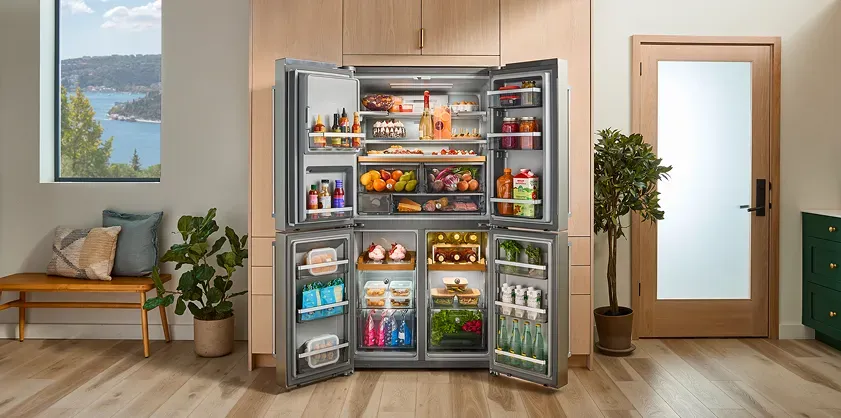
Why Does Refrigerator Organization Matter?
Proper refrigerator organization does more than make your kitchen look neat.
It also helps:
-
Keep foods fresher longer
-
Reduce food waste
-
Improve food safety
-
Make meal planning easier
-
Increase usable storage space
-
Help your refrigerator maintain consistent temperatures
Does Refrigerator Organization Keep Food Fresher?
Yes. Placing foods in the correct temperature zones helps maintain freshness, reduces spoilage, and supports safe food storage.
Understanding Refrigerator Temperature Zones
Not every shelf inside your refrigerator stays at exactly the same temperature. Different sections are designed for different types of food. Knowing where each area is coolest or most humid helps preserve ingredients longer.
Which Part of the Refrigerator Is Coldest?
In most refrigerators, the bottom shelf near the back is the coldest area, making it the safest place to store raw meat, poultry, and seafood.
Top Shelf: Ready-to-Eat Foods
The upper shelves usually maintain one of the most consistent temperatures throughout the refrigerator.
This makes them ideal for foods that don't require cooking before eating.
Best Foods for the Top Shelf
-
Leftovers
-
Yogurt
-
Cheese
-
Drinks
-
Deli meats
-
Prepared meals
-
Ready-to-eat snacks
Keeping these items together also makes grabbing lunches and quick meals easier.
Middle Shelves: Everyday Essentials
The center shelves are excellent for foods you use regularly.
Best Foods for the Middle Shelves
-
Milk
-
Eggs (if recommended by the manufacturer)
-
Butter
-
Cottage cheese
-
Sour cream
-
Frequently used condiments
Keeping everyday items at eye level improves visibility and reduces the chance of forgetting groceries hidden behind other products.
Should Milk Go in the Door?
No. Although many people store milk in the refrigerator door, the door experiences the most temperature fluctuations. A center shelf typically keeps milk colder and fresher longer.
Bottom Shelf: Raw Meat and Seafood
The bottom shelf is usually the coldest part of the refrigerator.
It's also the safest location for raw proteins.
Best Foods for Bottom Shelf Storage
-
Raw beef
-
Chicken
-
Turkey
-
Seafood
-
Pork
Always place raw meat in sealed containers or on trays to prevent juices from dripping onto other foods.
Food Safety Tip: Keeping raw meat on the lowest shelf helps reduce the risk of cross-contamination if packaging leaks.
Where Should Raw Meat Be Stored?
Always store raw meat on the bottom shelf in leak-proof containers to help protect other foods.
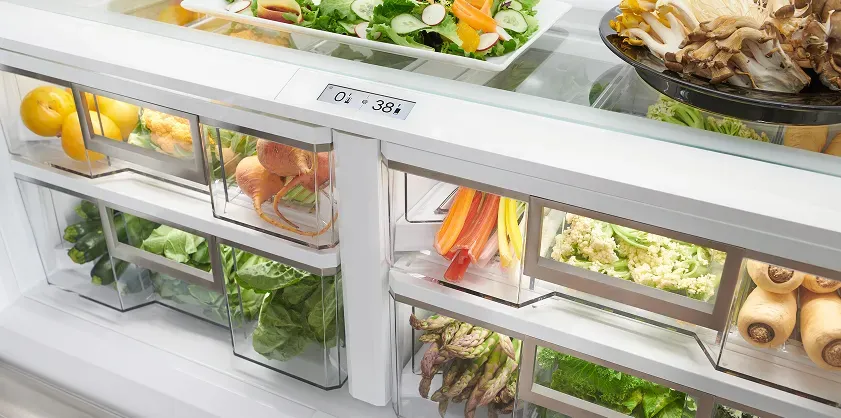
How to Use Humidity Drawers Correctly
Many homeowners use their crisper drawers without realizing they serve different purposes.
Humidity controls help regulate moisture levels for different types of produce.
High-Humidity Drawer
Best for:
-
Leafy greens
-
Broccoli
-
Carrots
-
Herbs
-
Cabbage
-
Spinach
These vegetables retain moisture better in a high-humidity environment.
Low-Humidity Drawer
Best for:
-
Apples
-
Grapes
-
Pears
-
Peaches
-
Avocados
-
Citrus fruits
Many fruits release ethylene gas, which can speed up the ripening of nearby vegetables. Keeping them in a separate low-humidity drawer helps preserve freshness.
Why Do Refrigerators Have Two Crisper Drawers?
The two drawers create different humidity environments that help fruits and vegetables stay fresh longer by managing moisture and ethylene gas.
Refrigerator Door: Condiments and Beverages
The refrigerator door is the warmest area because it's opened frequently throughout the day.
It's best reserved for foods that are less sensitive to temperature changes.
Store in the Door
-
Salad dressings
-
Mustard
-
Ketchup
-
Salsa
-
Pickles
-
Juice
-
Sparkling water
Avoid storing:
-
Milk
-
Raw eggs
-
Fresh meat
Why a French Door Refrigerator Makes Organization Easier
A French door refrigerator is one of the most popular refrigerator styles because it combines generous fresh-food storage with flexible organization.
Many models include:
-
Wide adjustable shelves
-
Full-width deli drawers
-
Large produce bins
-
Door bins for gallon containers
-
Bottom freezer storage
-
Flexible temperature zones
These features make it easier to separate foods by category and reduce clutter.
Best for:
-
Families
-
Home cooks
-
Weekly grocery shoppers
-
Meal preppers
-
Entertaining
Are French Door Refrigerators Better for Organization?
Yes. Many French door refrigerators provide wider shelves, larger crisper drawers, and customizable storage options that make organizing groceries easier than many traditional refrigerator layouts.
Don't Overfill Your Refrigerator
A refrigerator packed from top to bottom may seem efficient, but overcrowding can actually reduce cooling performance.
Cold air needs room to circulate around food.
When airflow is blocked:
-
Cooling becomes uneven
-
Food may spoil faster
-
The refrigerator works harder
-
Energy consumption may increase
How Full Should a Refrigerator Be?
A refrigerator should be comfortably stocked but not overfilled. Leaving space between items helps maintain consistent temperatures and allows air to circulate properly.
Keep Similar Foods Together
Grouping similar foods makes it easier to find ingredients before they expire.
Consider creating sections for:
-
Dairy
-
Snacks
-
Drinks
-
Breakfast items
-
Leftovers
-
Lunch ingredients
-
Fresh produce
Clear storage bins can also help separate categories while making shelves easier to clean.
Simple Tips to Reduce Food Waste
A well-organized refrigerator can help you use groceries before they spoil.
Easy Habits to Adopt
-
Place older foods toward the front.
-
Move newly purchased groceries to the back.
-
Label leftovers with the date.
-
Store herbs in water when appropriate.
-
Check expiration dates weekly.
-
Clean out expired foods before grocery shopping.
How Often Should You Organize Your Refrigerator?
A quick review once a week and a deeper cleaning every month can help keep food organized, reduce waste, and maintain freshness.
Energy Efficiency Starts with Good Organization
Keeping your refrigerator organized can also improve efficiency.
An organized refrigerator allows:
-
Better airflow
-
Faster access to food
-
Shorter door-open times
-
More consistent cooling
If you're considering replacing an older refrigerator, an ENERGY STAR®-certified refrigerator can provide improved efficiency while helping lower energy use compared to older models.
For homeowners researching a refrigerator for sale, newer models also offer improved storage flexibility, adjustable shelving, and advanced cooling technologies designed to keep groceries fresher longer.
When Is It Time to Upgrade Your Refrigerator?
Sometimes organization alone isn't enough.
If your current refrigerator has:
-
Inconsistent temperatures
-
Limited shelving
-
Poor produce storage
-
Frequent repairs
-
Rising energy bills
…it may be time to explore newer refrigerator designs.
Modern refrigerators offer features like:
-
Flexible storage systems
-
Convertible drawers
-
Better humidity controls
-
Improved energy efficiency
-
Larger usable capacity within similar exterior dimensions
Baron's appliance experts can help homeowners compare refrigerator styles to find one that best fits their kitchen and food storage needs.
Better Organization Means Fresher Food
A well-organized refrigerator helps protect your groceries, simplifies meal planning, and makes everyday life a little easier.
By understanding each section of your refrigerator, from humidity drawers to temperature zones, you can keep food fresher longer, reduce waste, and improve food safety.
Whether you're reorganizing your current refrigerator or shopping for a new French door refrigerator, taking advantage of thoughtful storage features can make a noticeable difference in your daily routine.
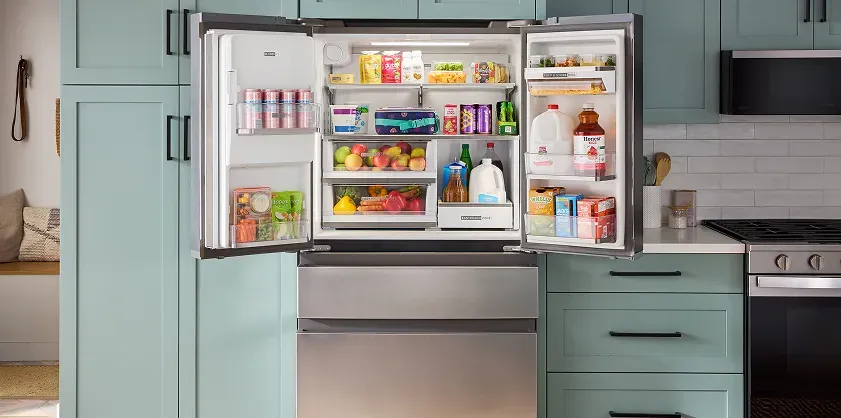
Explore All Refrigerators at Baron's Major Brands Appliances
Whether you're looking for a spacious French door refrigerator, an energy-efficient upgrade, or the perfect refrigerator for your kitchen layout, Baron's offers a wide selection backed by knowledgeable local appliance experts, including configuration styles like side-by-side, bottom freezer, built-in, and more. Visit a Baron’s appliance showroom in New Hampshire to compare refrigerator styles and discover storage solutions designed for the way you live.
FAQs: How to Organize Your Refrigerator for Better Food Storage
How should I organize my refrigerator for the best food storage?
Organize your refrigerator based on temperature zones rather than convenience. Store ready-to-eat foods on the upper shelves, dairy products in the middle, raw meat on the bottom shelf, fruits and vegetables in their designated humidity drawers, and condiments in the door. This organization helps maximize freshness and supports proper food safety.
What foods should go in the humidity drawers?
High-humidity drawers are best for leafy greens, broccoli, carrots, herbs, and other vegetables that benefit from extra moisture. Low-humidity drawers are better for fruits like apples, grapes, pears, and citrus because they release ethylene gas, which can cause vegetables to spoil more quickly. Using each drawer correctly helps extend the life of your produce.
Is a French door refrigerator easier to organize?
Yes. French door refrigerators typically offer wider shelves, flexible storage configurations, large produce drawers, and full-width compartments that make organizing groceries much easier. Many homeowners appreciate the improved visibility and accessibility compared to more traditional refrigerator layouts.
Why shouldn't milk be stored in the refrigerator door?
The refrigerator door experiences the greatest temperature fluctuations because it is opened frequently throughout the day. Storing milk on a middle shelf, where temperatures remain more consistent, can help it stay fresh longer. The door is better suited for condiments, beverages, and other items that are less temperature sensitive.
Does organizing a refrigerator improve energy efficiency?
Yes. An organized refrigerator allows cold air to circulate more freely, helping maintain consistent temperatures and reducing strain on the appliance. It also makes it easier to find what you need quickly, minimizing the amount of time the refrigerator door stays open and improving overall efficiency.
Related Articles